Sad truth of business owners out of control missing kids birthday party.

FROM STARTUP TO COMPANY: THE JOURNEY EVERY FOUNDER HAS TO TAKE

Part 2: The Triggers and Tells: How to Know When Product Mode Is Over


My twin girls were born with severe immune disorders.

From the day they came home, every week was a fight. A fight to keep them growing. A fight to keep them healthy. A fight to keep them on the right side of a medical system that did not always have good news. Alexis, my wife, carried most of that weight with a grace I still cannot fully explain. She was put on this planet to keep those girls thriving. I am convinced of it.

So every birthday in our house is not just a birthday. It is a celebration of another year we fought for and won.

For their second birthday, Alexis had found something extraordinary. Twin ponies dressed as unicorns that the girls could paint. My parents were there. The whole family was in the backyard. Two little girls in purple dresses, paint brushes in hand, about to have the kind of afternoon that becomes a core memory for everyone who witnesses it. My phone rang.

Our website was down. On a Saturday. All of our classes, most of our weekend revenue, gone. And nobody on the team knew what to do. Not because they were not capable. Because I had never built a system that would let them handle it without me. No on-call process. No rollback protocol. No clear ownership of what to do when something broke. I left the party.

I missed most of it. I got back in time for the tail end of something that Alexis had spent weeks planning and the girls had been looking forward to in the way only two year olds can. And when I walked back into that backyard, paint brushes already put away, I made myself a promise. Never again.

But here is the thing about promises made in anger and guilt. They feel like resolve in the moment. What they actually are is a symptom. The real problem was not that I got a phone call on a Saturday. The real problem was that I had built a company that could not function without me, and I had been too busy chasing the next feature, the next product idea, the next shiny thing, to notice.

I could have pointed fingers at a lot of people that day. I chose not to. Because the only person I could honestly hold responsible was the one who drove home from the party alone.

That was the first punch.


About a month later I was teaching a entrepreneurship class at Rice University when a dear friend and my guest lecturer named Rassul Zarinfar walked in and put a graphic up on the screen.

He called it Changing Sports.

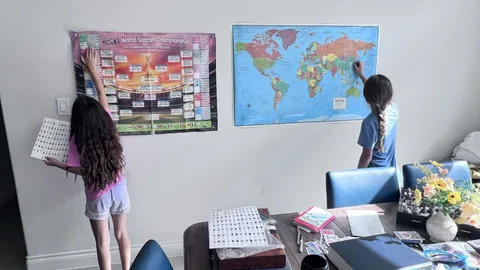
Illustration of the entrepreneurial journey as an analogy of changing sports.

It mapped the journey of a growing company through four sporting analogies. Golf, the solo founder with a single focus and no communication needed. Doubles Tennis, two partners covering their areas instinctively. Pickup Basketball, a small scrappy team running on talent and hustle with minimal structure. Soccer, specialty players starting to emerge with fluid communication and real game strategy. And finally Football, multi-teams, highly specialized roles, a mastered playbook.

I sat there and felt my stomach drop.

We had been playing pickup basketball on a football field for three years too long. Talented athletes running instinct plays against an opponent that had a playbook, defined roles, and a coordinated game plan. And we kept wondering why we things were so uncomfortable.

Rassul’s graphic did not tell me anything I did not already know somewhere deep in my gut. What it did was give that feeling a shape. A language. A framework I could hold up against what we had built and finally see clearly what was wrong.

That was the second punch.

I will tell you about the third punch in Part 3. Because that one is about what you actually do once you can see it. And it deserves its own conversation.


The Triggers and Tells

Here is what I want to give you that nobody gave me.

A way to see it before it sees you.

The inflection point between building a product and building a company does not announce itself. It does not send a calendar invite. Most founders blow past it at full speed and only recognize it in the rearview mirror, usually after something breaks, after someone quits, after a quarter that should have been great turns out to be a mess.

But there are signals. Real ones. And they fall into two categories.

The first category is what the market is telling you. These are signals that your product has earned the right to be scaled. That the discovery phase is over and the execution phase is waiting.

The second category is what your organization is telling you. These are signals that your company has outgrown the way it is currently being run. That the pickup basketball roster cannot win the game you are now playing.

When both categories are lighting up at the same time, you are at the line. Whether you are ready to cross it or not.


What the Market Is Telling You

Have you identified a specific ICP and do you know how to speak directly to their pain? Not a general target market. A specific niche, a specific problem, a specific conversation that lands every time.

Are customers paying without heavy discounting or convincing? If you are still fighting for every dollar and every deal feels like starting from scratch, the market is still giving you feedback. When customers pay because they need what you have, the market has spoken.

Are existing customers asking for more, expanding their usage, or sending referrals? Organic expansion and word of mouth from existing customers is one of the clearest signals that product-market fit is real and not just hopeful.

Can someone other than you repeat the sales process and close business? Founder-led sales is how every company starts. But if you are the only person who can sell it, you do not have a sales process. You have a personality. Those are very different things to scale.

Have you raised capital on the back of scaling what works rather than still finding what works? When investors stop betting on your discovery and start betting on your execution, they are telling you something important. Listen to them.


What Your Organization Is Telling You

Are you as founder becoming a bottleneck to decisions, output, or momentum? If your team is waiting on you for answers, approvals, and direction on things that should not require you, the organization has outgrown your current operating model.

Are you considering moving business development out of your hands into a dedicated role? The moment you start thinking about hiring your first head of sales or your first dedicated business development person, part of you already knows the game has changed.

Are you starting to hire specialty players into defined roles rather than utility athletes who do everything? Golf and Doubles Tennis teams are built on generalists. Soccer and Football teams require specialists. If your org chart is starting to reflect that shift, your company is telling you something.

Is your team hitting coordination breakdowns that did not exist when you were smaller? People stepping on each other’s toes. Things falling through the cracks. The same issues surfacing week after week with no resolution. These are not people problems. They are structure problems.

Are process gaps showing up around a product that is otherwise stable and ready to scale? When the product is solid but the delivery, the customer service, the onboarding, and the internal operations feel like controlled chaos, you are not in product-building mode anymore. You are in company-building mode whether you have accepted it or not.


The Score

Go back through both lists and answer each question honestly. Not how you want to answer it. How you would answer it if your most trusted advisor was sitting across from you asking it out loud.

If you answered yes to six or more, you are at the inflection point. The market has given you signal. The organization is straining under the weight of its own growth. The game has changed.

The question is not whether you are ready. The question is whether you are going to see it now or later.

I saw it later. A birthday party, a guest lecture, and a book slid across a lunch table finally broke through. And by the time I was ready to act on it, the cost of waiting was already sitting on my balance sheet and in my mirror every morning.

You do not have to wait that long.

That is what Part 3 is about.
Next: Part 3, Building the Machine Without Killing the Magic

Previous: Part 1, The Moment Your Startup has to Grow Up